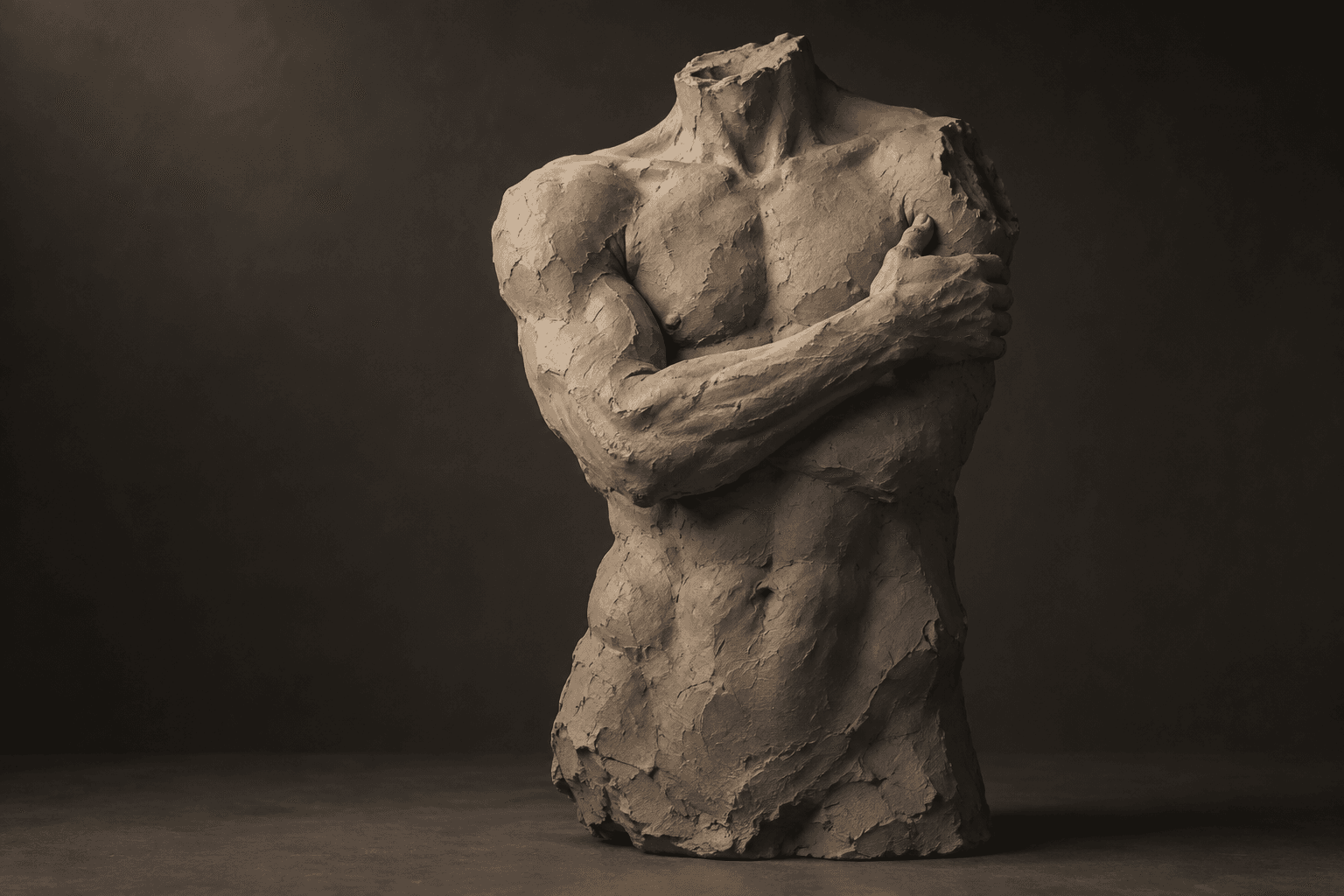
A figure does not need to describe every part of a body to feel present. A turn of the torso or the relationship between two limbs can be enough to hold our attention. Gesture invites recognition while leaving room for uncertainty.
Reading a pose
Folded arms might suggest rest, reserve or self-protection. None of these readings belongs to the pose alone. The angle from which we look, the surrounding forms and our own experience all contribute to what we see.
This openness matters when considering the male body. A figure can carry strength and vulnerability together. It can invite a consideration of desire or identity without providing a single, fixed explanation of either.
The space around the figure
Look beyond the outline. The gap between an arm and a torso, or the space beneath a bent limb, helps shape the gesture. Empty space is part of the composition: it can make a pose feel contained, open, balanced or unsettled.
A useful way to return to a familiar sculpture is to begin with a different detail. Instead of searching for a face, follow a shoulder. Instead of naming an emotion, notice where the weight seems to rest. Interpretation can wait while the figure becomes visible again.