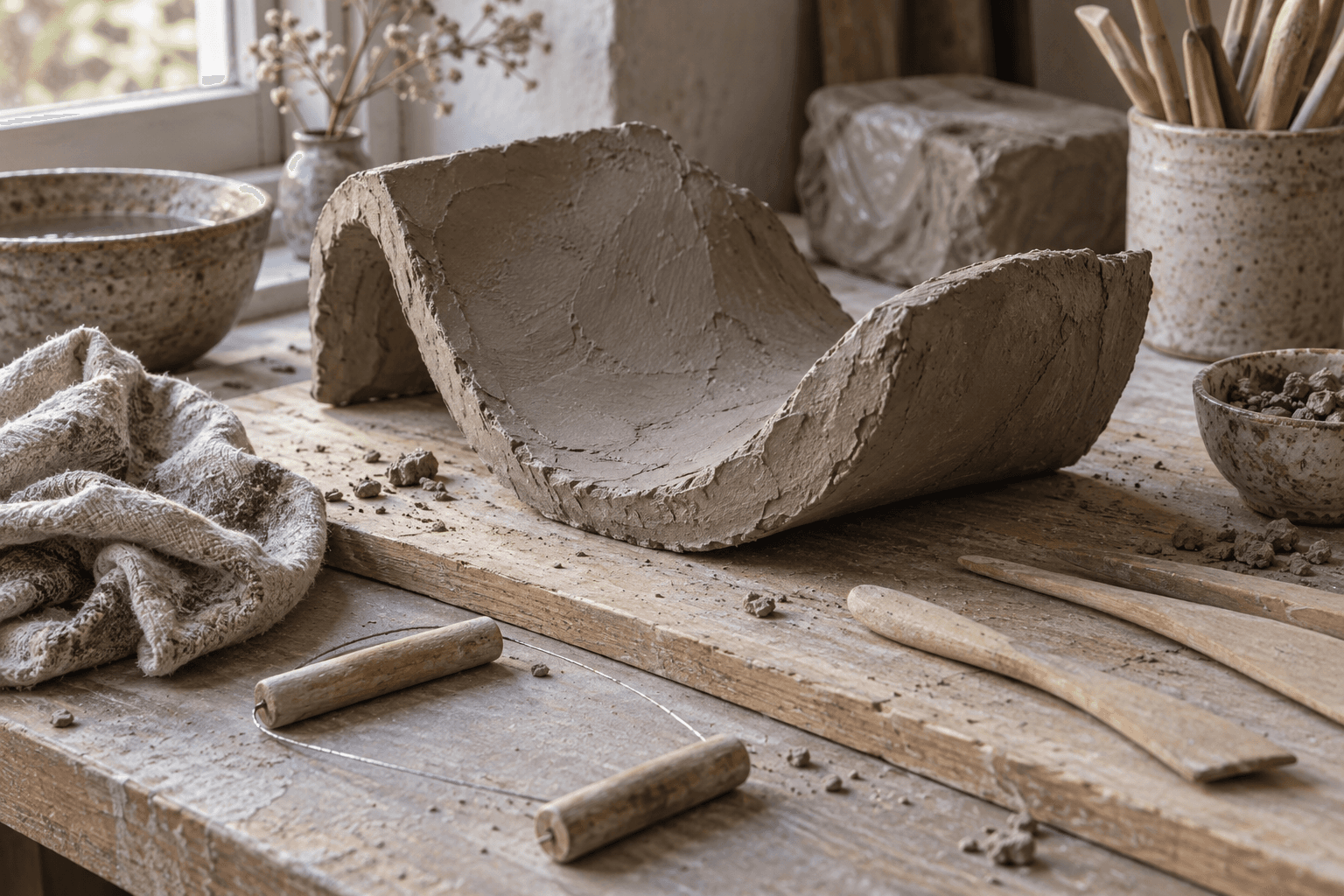
Before a sculpture becomes a recognisable figure, it is material occupying space. Clay asks us to notice that material: a ridge, a shallow hollow, the difference between a smooth passage and a rough edge. These details can be as expressive as the outline of the work.
A surface worth looking at
A surface changes with the light. What appears quiet from across a room may reveal small variations at close range. Shadows collect in depressions; raised edges catch the light. Looking slowly allows those modest differences to become part of the encounter.
It is tempting to read every mark as evidence of a particular gesture. Yet a finished surface does not tell us everything about how it was made. We can appreciate its texture without inventing a process or a story for the person who shaped it.
Between form and material
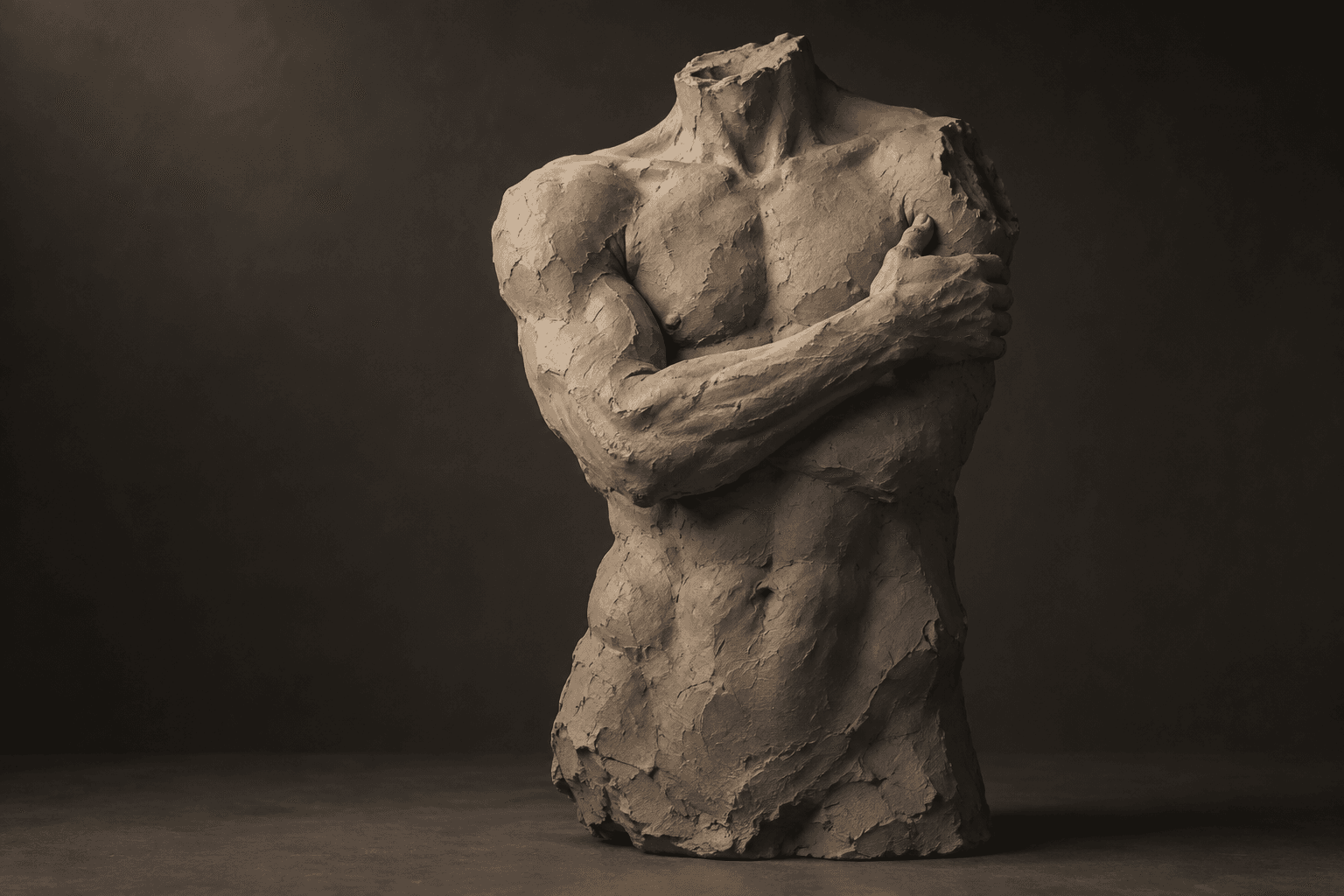
In figurative sculpture, recognition and material sit together. We may see an arm or a shoulder, then become aware again of the clay. The figure never entirely leaves its material behind. That movement between body and substance gives us more than one way to look.
Try following a single edge with your eyes. Notice where it becomes sharper, where it softens and where it disappears into shadow. There is no need to settle on an interpretation immediately. Attention to the material is already a beginning.